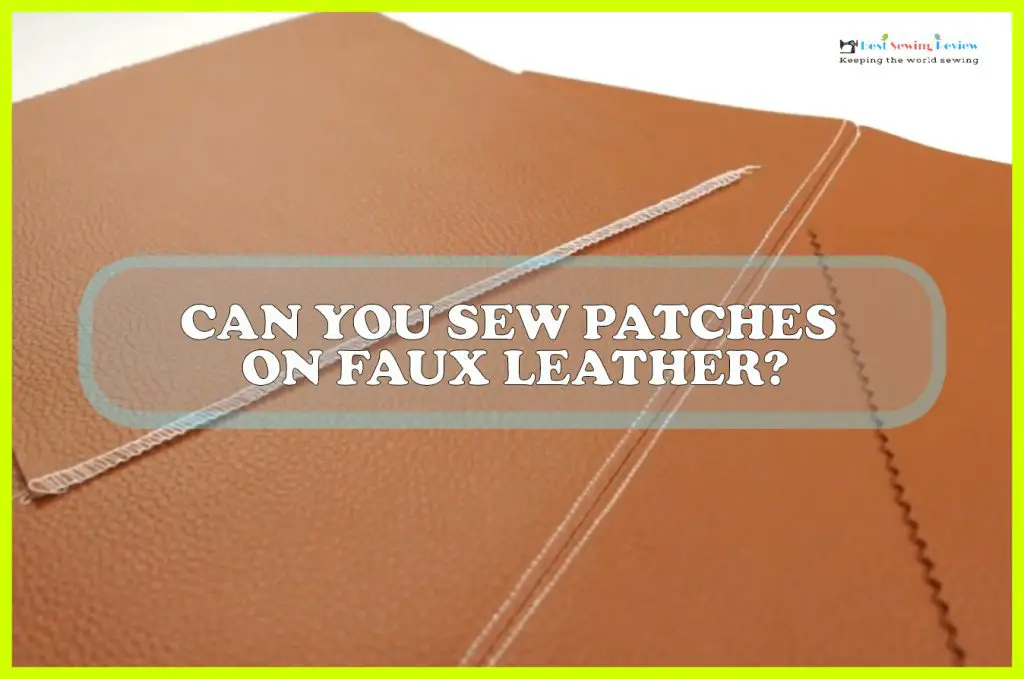
You can absolutely put patches on faux leather (pleather or vinyl) — costumers and crafters do it all the time — but it behaves differently from fabric in two important ways: every needle hole is permanent, and heat can melt it. Work with those two facts and patches go on cleanly.
Sewing patches on
- Use a leather or denim needle and a longer stitch length. Short stitches punch a row of close holes that act like a perforated tear line — long stitches keep the material strong.
- Don’t pin — pins leave permanent holes. Hold the patch with sewing clips, washable glue stick, or a strip of wonder tape instead.
- Use a walking foot, roller foot, or Teflon foot so the sticky surface feeds smoothly instead of dragging.
Iron-on and no-sew options
Be careful with iron-on patches: faux leather is heat-sensitive and can melt, bubble, or scar. If you try it, use the lowest heat that activates the glue, always with a pressing cloth, and test on a hidden spot first. Honestly, the safer route is to glue the patch on with a flexible fabric or leather glue (E6000 or similar) — strong, no holes, no heat. For a torn jacket rather than a patch, see fixing a tear in leather.
Frequently asked questions
What needle do you use for faux leather?
A leather or denim needle, with a longer stitch length so you don’t perforate the material into a tear line.
Can you iron patches onto faux leather?
Cautiously — faux leather can melt under heat. Use the lowest heat that works, a pressing cloth, and test a hidden spot first. Gluing the patch on is safer.
How do you attach patches to pleather without sewing?
Use a flexible fabric or leather glue (such as E6000) to bond the patch — it’s strong, leaves no holes, and avoids the heat that can damage faux leather.